Posted on Leave a comment

State Firearms Laws: A Practical Guide

Buy 03 Glock switch: Blue Color - Conway Hunting Supply | Firearms, Ammo & Gear

State Firearms Laws: A Practical Guide

You can legally purchase a SIG Sauer P365 in Texas with a standard background check, but try to buy that same 9mm pistol in New York City and you’ll need a permit that can take over six months to acquire. This is the reality of navigating state firearms laws. Ignorance isn’t an excuse, and a violation can mean felony charges. This guide breaks down the critical differences you need to know before you buy, own, or travel with a firearm.

Permitless Carry vs. May-Issue: The Divide

As of early 2026, over 30 states have adopted permitless or “constitutional” carry laws. This means if you’re a legal resident and can legally possess a firearm, you can carry a concealed handgun without a state-issued permit. States like Tennessee, Arizona, and Ohio fall into this category. The other end of the spectrum features “may-issue” states like California, New York, and New Jersey. Here, local authorities have broad discretion to deny a concealed carry permit, even if you meet all objective criteria. In these states, simply owning a handgun often requires a separate permit or license. Before you consider a Compact Pistols collection for carry, verifying your state’s classification is the first and most crucial step.

Assault Weapon Bans & Magazine Capacity Limits

This is where state laws diverge most dramatically. A standard AR-15 rifle is freely sold in Texas but is classified as an “assault weapon” and banned in states like California, New York, and Washington. These bans often hinge on specific features like pistol grips, adjustable stocks, or muzzle devices. Magazine capacity is another major flashpoint. Colorado and Vermont limit magazines to 15 rounds, while Maryland and New Jersey cap them at 10 rounds. Purchasing a standard 17-round magazine for a Glock 17 is a routine transaction at Conwayhuntingsupply for customers in free states, but it’s a felony to import one into a restrictive state. Always check local definitions before purchasing any semi-automatic rifle or standard-capacity magazine.
Buy 02 Glock Switch Keychain

NFA Items: State-Level Restrictions

Federal law regulates items like suppressors, short-barreled rifles (SBRs), and machine guns under the National Firearms Act (NFA). However, states can impose further restrictions. While an NFA trust and a $200 tax stamp allow you to own a suppressor federally, states like Illinois, California, and New York prohibit civilian ownership entirely. Similarly, SBRs are illegal in several states. This directly impacts the functionality of platforms. For example, configuring a rifle with a barrel under 16 inches requires an SBR stamp, which is impossible if your state bans them. It’s critical to understand both federal NFA rules and your state’s specific prohibitions before pursuing such items.
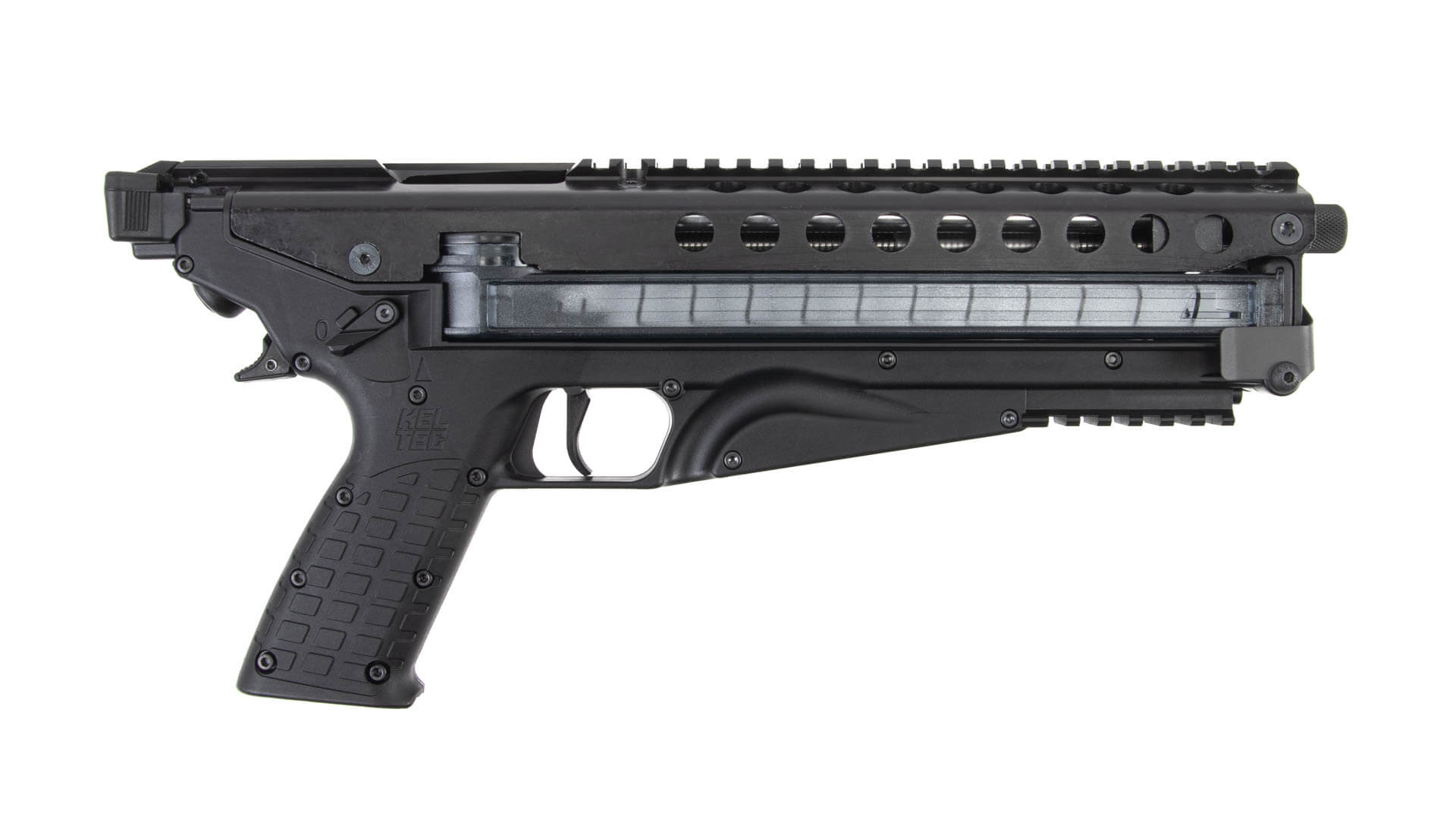
KelTec KP50 5.7x28mm Pistol

Transporting Firearms Across State Lines

The Firearm Owners’ Protection Act (FOPA) provides limited federal protection for transporting firearms through states where they are illegal, provided they are unloaded, locked in a case, and inaccessible from the passenger compartment. However, FOPA is not a guarantee against arrest, especially in states with aggressive enforcement. Never assume your home state’s laws apply elsewhere. For example, driving from Pennsylvania to Maine with a handgun requires careful planning to avoid New York. Your best resource is the specific Attorney General website for each state you’ll travel through. Planning your route and understanding “peaceable journey” laws is as important as packing your ammunition.
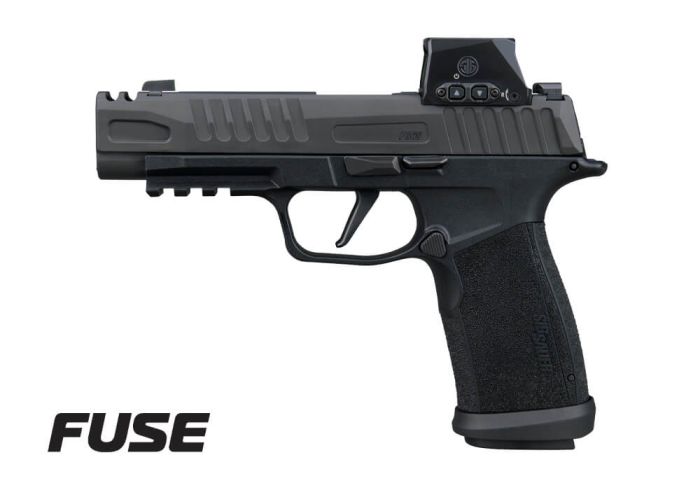
SIG Sauer P365 FUSE Comp 9mm Pistol

Private Sales & Background Check Requirements

Federal law requires licensed dealers (FFLs) to conduct a background check on every sale. Private sales between individuals are a different matter. In “universal background check” states like Colorado, Oregon, and Virginia, all firearm transfers, even private ones, must go through an FFL. In other states, private sales between residents are permitted without a check. This is a major point of compliance. If you’re selling a Springfield Armory XD Mod.4 to a friend in a universal background check state, you must meet at a local FFL to process the transfer. Conwayhuntingsupply always conducts the required NICS check, but the onus is on you to know the law for private transactions in your jurisdiction.

Can I buy a firearm online if I live in a restrictive state?

Yes, but with major caveats. You can purchase the firearm from an online retailer like Conwayhuntingsupply, but it must be shipped to a Federal Firearms License (FFL) holder in your state. That local FFL is required to complete the transfer and must comply with all state laws. If the firearm is banned in your state (e.g., a standard-capacity magazine or a named “assault weapon”), the FFL will refuse the transfer. You are only paying for the item; the final legality is determined at the point of pickup under your local laws.

Does my state’s concealed carry permit work in other states?

It depends on reciprocity agreements. Many states have agreements to recognize each other’s permits, but many do not. A permit from Florida has broad recognition, while a permit from California is rarely recognized elsewhere. You must check the specific reciprocity map for your home state’s permit. Relying on a general online map is not enough; consult your state’s Attorney General website for the official, current agreements. When in doubt, assume your permit is not valid and research the carry laws of the state you are entering.

Are “pre-ban” firearms or magazines grandfathered in banned states?

>Sometimes, but the rules are extremely specific and risky. Some states, like Massachusetts, have a cutoff date for “pre-ban” firearms and magazines that are legal to own. However, you must have definitive proof of manufacture date, and the burden of proof is on you. In other states, like New York’s SAFE Act, previously owned “large capacity” magazines had to be permanently modified or surrendered; there is no grandfathering. Never assume an item is grandfathered. Always consult the exact statute or an attorney specializing in firearms law in that state.

Browse our firearms collection

Last updated: March 27, 2026

Posted on Leave a comment

Canadian Firearms Laws Explained

[New: KelTec KP50 and MP50 5.7 Platform with 100 Rounds of 5.7 On-Gun](http://www.guns.com/news/2026/02/24/new-keltec-kp50-and-mp50-57-platform) - Conway Hunting Supply | Firearms, Ammo & Gear

Canadian Firearms Laws Explained

Owning a handgun in Canada is fundamentally different than in the United States. Since October 2022, a federal freeze on the sale, purchase, and transfer of handguns has been in effect, meaning you cannot legally buy a new or used handgun from a store or individual. Understanding the three firearm classifications—Non-Restricted, Restricted, and Prohibited—is the first step to navigating ownership.

The Three Firearm Classes

Canadian law divides firearms into three classes, each with distinct rules. Non-Restricted firearms include most conventional hunting rifles and shotguns, like the popular bolt-action .308 Winchester or 12-gauge pump-action shotguns. These require a Possession and Acquisition Licence (PAL). Restricted firearms are primarily handguns with a barrel length over 105mm and certain semi-automatic rifles. Owning these requires a Restricted PAL (RPAL), registration certificates, and they can only be discharged at approved shooting ranges. Prohibited firearms include handguns with barrels 105mm or shorter, automatic weapons, and firearms specifically named in regulations. For most civilians, a Prohibited licence is not available. It’s critical to verify a firearm’s classification through the RCMP’s Firearms Reference Table before attempting to purchase, even from a retailer like Conwayhuntingsupply.

The Handgun Freeze and Its Impact

The national handgun freeze, enacted via Bill C-21, effectively halted the legal commercial market for handguns. You cannot buy, sell, or transfer a handgun within Canada, with very limited exceptions for elite sport shooters, those with specific grandfathered status, and certain inheritance scenarios. This means models like the SIG Sauer P365 FUSE Comp 9mm Pistol or the Springfield Armory XD Mod.4 are not available for new Canadian purchasers. The freeze does not affect current owners’ ability to possess their already-registered handguns, but they cannot sell them. This legislation has created a static pool of legally owned handguns in the country.

Buy 02 Glock Switch Keychain

Licensing: Your PAL and RPAL

You cannot legally purchase any firearm or ammunition in Canada without a valid Possession and Acquisition Licence (PAL). The process involves taking the Canadian Firearms Safety Course (CFSC) for a Non-Restricted PAL, and the Canadian Restricted Firearms Safety Course (CRFSC) for an RPAL. After passing the exams, you apply to the RCMP with photos, references, and a background check. Processing times can exceed six months. An RPAL allows you to acquire Restricted firearms, but remember, the handgun freeze currently blocks new acquisitions. Your licence must be renewed every five years. Retailers like Conwayhuntingsupply are required by law to verify your PAL number and photo ID for every ammunition and firearm purchase.

KelTec KP50 5.7x28mm Pistol

Transportation, Storage, and Use

Strict rules govern how you move and store firearms. Non-Restricted firearms must be unloaded during transport, preferably in a locked case, with ammunition stored separately. For Restricted firearms, the rules are far more stringent: they must be unloaded, locked in a hard-sided container, and transported directly to and from an approved shooting range, gun show, or border point. You must also have an Authorization to Transport (ATT) for these movements, which is typically attached to your RPAL for range transport. Storage laws require all firearms to be unloaded and secured with a locking device (like a trigger lock) and/or in a secure cabinet or safe. Ammunition should be stored separately. Violating these rules can result in criminal charges and licence revocation.

Recent Changes and Prohibited Devices

Legislation is constantly evolving. Recent bans have targeted certain firearm models by name and specific components. For example, devices that are designed to increase a semi-automatic firearm’s rate of fire, such as a bump stock, are considered prohibited devices. It is illegal to import, acquire, or sell them. Magazine capacity is also heavily restricted: centerfire semi-automatic rifle magazines are limited to 5 rounds, and handgun magazines to 10 rounds, regardless of the magazine’s designed capacity. You must use a permanently pinned or blocked magazine to comply. Always check the most current regulations through the RCMP Canadian Firearms Program before purchasing any accessory or firearm, including from our ammunition collection.

SIG Sauer P365 FUSE Comp 9mm Pistol
Can I still buy a rifle or shotgun in Canada?

Yes, provided you have a valid Possession and Acquisition Licence (PAL). Non-Restricted rifles and shotguns, which include most common hunting firearms, are not subject to the handgun freeze. You can purchase them from a licensed retailer like Conwayhuntingsupply, who will verify your PAL. Always confirm the firearm’s classification is Non-Restricted before purchasing.

What happens if I inherit a handgun?

Inheriting a handgun is one of the few exceptions to the transfer freeze, but the process is strict. The executor of the estate must apply for a temporary licence and then transfer the firearm to you via the RCMP’s Firearms Program. You must already hold a valid Restricted PAL (RPAL) to receive it. The transfer must be approved before you take possession, and the handgun must be stored and transported according to Restricted firearm laws throughout.

Can I use my firearm for self-defense at home?

No. Canadian law does not recognize firearm ownership for the purpose of self-defense. Storing a firearm for protection is illegal. Firearms may only be used for lawful activities like hunting or target shooting at approved ranges. Using a firearm against a person, even in your own home, will likely result in serious criminal charges unless under the most extreme and narrowly defined circumstances of self-preservation, which are exceedingly rare in legal precedent.

Browse our firearms collection

Last updated: March 27, 2026

Posted on Leave a comment

California Firearms Laws Explained

Order Selector Switch for Glock – Green Online - Conway Hunting Supply | Firearms, Ammo & Gear

California Firearms Laws Explained

Owning a Glock 19 in California isn’t the same as owning one in Texas. The state’s complex web of regulations, from the Handgun Roster to the Assault Weapons Ban, directly dictates what you can buy, how you can configure it, and where you can take it. Getting it wrong isn’t just inconvenient—it’s a felony. This breakdown cuts through the legal jargon to give you the operational knowledge you need.

The California Handgun Roster

The Roster of Certified Handguns is a California-specific hurdle. For a new semi-automatic pistol to be sold by a dealer to a private citizen, it must be on this state-approved list. The requirements include microstamping technology, which is functionally unavailable, effectively freezing the list. This means popular new models like the latest SIG P365 variants or the Springfield Hellcat Pro are not roster-approved for standard sale. Your options are to purchase a used, off-roster handgun from another California resident via private party transfer (PPT) at a significant markup, or acquire one through a few narrow exemptions like intra-familial gift from an out-of-state parent. At Conwayhuntingsupply, we clearly label which pistols, like the Springfield Armory XD Mod.4, are roster-compliant for direct shipment to your FFL.

Assault Weapons & Feature-Based Bans

California’s Assault Weapons Control Act (AWCA) prohibits firearms classified as “assault weapons.” For semi-automatic, centerfire rifles, this is primarily a feature-based test. If a rifle has a detachable magazine and any one of several “evil features” (like a pistol grip, flash hider, or telescoping stock), it is banned. The common workaround is a “featureless” build: remove the offending features by using a fixed stock, a fin grip that prevents wrapping the thumb, and a muzzle brake instead of a flash hider. Alternatively, a “fixed magazine” kit, like the AR MagLock, legally makes the magazine non-detachable without disassembling the action, allowing you to keep features like a pistol grip. Pistols and shotguns have their own, even more restrictive, feature lists.

Buy 02 Glock Switch Keychain

Magazine Capacity Restrictions

It is illegal to manufacture, import, keep for sale, offer for sale, or give away any magazine capable of holding more than 10 rounds. Possession of such “large-capacity magazines” (LCMs) is also generally illegal. There was a brief freedom week in 2019 when possession became legal, but that window has closed. This law impacts nearly every modern firearm. A standard Glock 17 ships with a 17-round magazine; to own one in California, you must either use a permanently blocked (pinned) 10-round magazine or possess it under very specific, narrow exemptions. This is why many firearms shipped to California come with state-compliant 10-round mags. Always verify capacity when purchasing ammunition or magazines.

KelTec KP50 5.7x28mm Pistol

The 10-Day Wait & Ammunition Background Check

All firearm purchases from a dealer require a 10-day waiting period, starting when the DROS (Dealer’s Record of Sale) information is submitted to the DOJ. This is a mandatory cooling-off period, no exceptions. For ammunition, since 2019, you must pass an instant background check for each purchase, with a $1 fee. You must be 21 for handgun ammo and 18 for rifle/shotgun ammo. The ammo check runs through the California Ammunition Purchase Records database. Having a current Curio & Relic (C&R) FFL with a COE (Certificate of Eligibility) or having a firearm registered to you in the state’s AFS database can streamline this process. Purchasing defensive ammunition requires the same check as range ammo.

Transportation and Storage Requirements

You cannot legally carry a loaded firearm in public without a permit, which are nearly impossible to obtain in many counties. During transport, unloaded firearms must be in a locked container. The trunk of a car counts as a locked container if it’s separate from the passenger compartment. For handguns, the locked container is mandatory. For long guns, they must be unloaded but do not explicitly require a locked container, though using one is the best practice to avoid any ambiguity. At home, if a child could potentially access the firearm, you must store it in a locked container or disable it with a state-approved safety device. This is a strict liability law.

SIG Sauer P365 FUSE Comp 9mm Pistol

Frequently Asked Questions

Can I buy a pistol that’s not on the Roster if I’m moving to California?

Yes, but you must act before establishing residency. New residents moving into California have a 60-day window to report any firearms they bring with them using a New Resident Report of Firearm Ownership (BOF 4010A). You can bring off-roster handguns you already own, but they must be California-legal (10-round mags, no threaded barrels for semi-autos). You cannot move to California with the intent to sell them.

Is it legal to own a .50 BMG rifle in California?

No. California Penal Code 12280 explicitly prohibits the possession, sale, or transfer of any .50 BMG caliber rifle. This is separate from the assault weapon laws. The ban is based on the cartridge itself. Some similar-caliber rifles, like those chambered in .416 Barrett, are not banned by this specific statute, but they may still fall under the assault weapon rules based on their features.

Can I legally install a bump stock on my rifle in California?

Absolutely not. Bump stocks and any other “multiburst trigger activators” are completely banned in California under Penal Code 16930. This includes devices like the SSAR-15 OGR. Possession, sale, or transfer is a felony. This state ban was in place years before the federal rule change.

Browse our firearms collection

Last updated: March 27, 2026