5.7x28mm vs 9mm – Which Round Is Right for You?
Last updated: March 2026
5.7x28mm vs 9mm: The 5.7mm fires a lighter, faster bullet with less felt recoil and better barrier penetration against soft body armor. The 9mm fires a heavier, slower bullet with proven stopping power, lower ammo cost, and a vastly deeper aftermarket. For most civilian shooters, 9mm is the practical choice — but 5.7mm is worth serious consideration for specific use cases.
Two Rounds, Two Different Design Philosophies
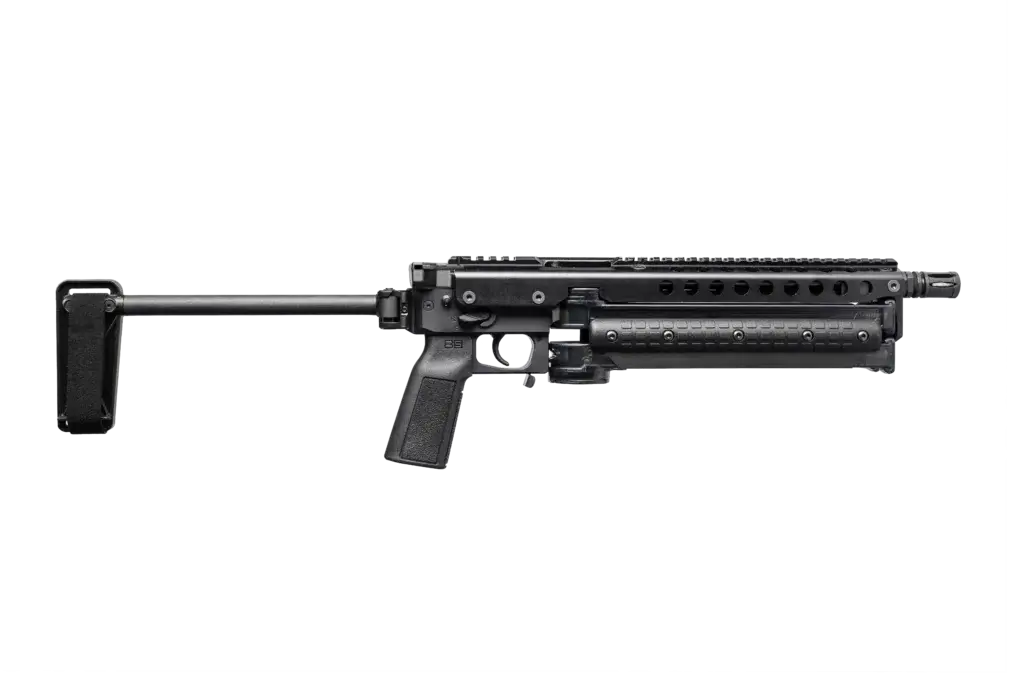
Imagine you’re standing at the counter at White’s Arms and you’ve narrowed your choice to two pistols: a 9mm carry gun or something in 5.7x28mm like the KelTec KP50. The caliber question alone is worth a real conversation. These aren’t interchangeable rounds — they were designed for different purposes and deliver different results.
Let me walk you through what actually matters when comparing these two cartridges for civilian use.
Ballistic Comparison
| Specification | 5.7x28mm (FN SS197) | 9mm (Federal HST 124gr) |
|---|---|---|
| Bullet Weight | 40 grains | 124 grains |
| Muzzle Velocity (4″ barrel) | ~1,650 fps | ~1,150 fps |
| Muzzle Energy | ~240 ft-lbs | ~364 ft-lbs |
| Felt Recoil | Very low | Moderate |
| Expansion (defensive loads) | Limited (small diameter) | Excellent (HST, Gold Dot, etc.) |
| Penetration (FBI gel) | 12–15 inches | 12–18 inches (load-dependent) |
| Ammo Cost (per 50 rounds) | $25–$40 | $12–$20 |
| Aftermarket Availability | Limited | Extensive |
The Case for 5.7x28mm
Purpose-Built for Low Recoil
FN designed the 5.7mm specifically for low recoil in automatic-fire weapons. That same characteristic makes it pleasant to shoot in semi-auto civilian platforms. If recoil sensitivity is a real concern — for newer shooters, smaller-framed shooters, or anyone recovering from an injury — 5.7mm is easier on the body than 9mm.
Body Armor Penetration
Certain 5.7mm loads (primarily restricted to law enforcement and military) are rated for Level IIIA soft armor penetration. Civilian loads don’t have this rating, but the flat, high-velocity bullet design does offer better performance against hard barriers than a round-nose 9mm.
Capacity in Some Platforms
With the KelTec KP50, you get 50+1 rounds before a reload. No 9mm pistol at the same price offers that capacity. If high round count is your priority and you’re not concerned about carry, this is a genuine advantage.
The Case for 9mm
Stopping Power and Terminal Performance
Modern 9mm defensive loads — Federal HST, Hornady Critical Duty, Speer Gold Dot — are among the best-performing defensive rounds ever tested. The FBI’s standards for penetration and expansion are met or exceeded by premium 9mm loads. The heavier, slower bullet creates reliable wound channels that outperform 5.7mm defensive loads in terminal ballistics testing.
Cost and Availability
9mm is the most widely produced handgun cartridge in the world. You can find it at every gun shop, sporting goods store, and big-box retailer. 5.7x28mm requires specialty stocking and is harder to find during ammo shortages. At the range, shooting 9mm costs roughly 40–50% less per round than 5.7mm — a real consideration if you shoot frequently.
Platform Selection
Want a full-size duty pistol? The S&W M&P9 M2.0 Metal in 9mm. Want the best carry pistol under $1,000? The SIG P365 FUSE Comp in 9mm. The 9mm ecosystem is mature, and you get better holster selection, more training-grade ammo, and more competitive shooting options.
Head-to-Head Scenarios
| Scenario | Better Caliber | Why |
|---|---|---|
| Everyday concealed carry | 9mm | More platform options, proven defensive loads |
| Home defense (high capacity priority) | 5.7x28mm (KP50) | 50+1 rounds is hard to beat |
| New/recoil-sensitive shooter | 5.7x28mm | Noticeably lighter recoil |
| Range shooting on a budget | 9mm | 50% cheaper per round |
| Terminal ballistics / defensive performance | 9mm | Premium defensive loads are better tested |
| Competition (high round count) | 9mm | Ammo cost and availability |
Pros & Cons Summary
5.7x28mm
- ✅ Low recoil — very manageable
- ✅ Flat trajectory
- ✅ Capacity advantage in KP50 platform
- ❌ More expensive ammo
- ❌ Fewer defensive load options
- ❌ Limited platform selection
9mm
- ✅ Proven terminal ballistics
- ✅ Affordable, widely available
- ✅ Enormous platform selection
- ❌ More felt recoil than 5.7mm
- ❌ Lower capacity in conventional pistols
Our Recommendation
For most people, 9mm is the right answer. The ecosystem is mature, the defensive loads are excellent, and the cost-per-round makes regular practice affordable. But if you’re specifically interested in the KP50 platform, the 5.7x28mm argument changes — 50+1 capacity with low recoil in a legal-to-own civilian platform is a genuinely compelling package.
Browse our handgun selection to see both calibers side by side, and feel free to stop by White’s Arms in Salt Lake City if you want to handle both platforms before deciding.
Frequently Asked Questions
Is 5.7x28mm good for self-defense?
Yes, though the defensive load selection is narrower than 9mm. The Speer Gold Dot 5.7mm and FN’s defensive offerings are legitimate defensive rounds. Terminal performance is acceptable, though most ballistic testers prefer premium 9mm for civilian defensive use.
Can I use 9mm magazines in a 5.7mm gun?
No. 5.7x28mm and 9mm have completely different cartridge dimensions and are not cross-compatible in any firearm platform.
Is 5.7x28mm armor-piercing?
Civilian 5.7mm loads are not armor-piercing. SS190 armor-piercing loads are restricted to military and law enforcement. Civilian loads like SS197 and SS195 do not penetrate Level III armor.
Which has less recoil: 5.7mm or 9mm?
5.7x28mm has significantly less felt recoil than 9mm, due to the much lighter bullet weight (40gr vs. 115–147gr). This makes 5.7mm noticeably more comfortable for extended range sessions and for recoil-sensitive shooters.